

|
||
|
|
||
This page last updated February 15, 2024 |

Back in the early 2000s, there were a number of serious head-on collisions on San Antonio area freeways that had no center median barrier. After a rash of these along Loop 1604, TxDOT installed portable concrete Jersey barriers in the median of 1604 and announced that they would be installing cable barriers in the medians of other area highways as part of a statewide effort to do so.
As often happens, the second-guessing began almost immediately. Skeptics bellowed that the "flimsy" barriers wouldn't even stop a Yugo, let alone an 18-wheeler. But engineers defended the barriers and insisted that they would work as intended. And indeed, in the first two years that cable barriers were in place in the San Antonio area, they stopped every single vehicle that hit them, including an 18-wheeler on I-35 in Von Ormy.
|
ADVERTISEMENT |
In fact, cable barriers are often better than metal guardrails and concrete Jersey barriers because they absorb more of the energy of the impact than do those traditional barriers, thus reducing the chance of injury and death. They also reduce the number of "rebound" accidents where a vehicle hits the barrier and then bounces-back into the traffic lanes. All of these benefits come at an installation cost that is typically about 25% the cost of concrete barriers and half the cost of metal guardrails, and repair is typically faster and easier than with other barriers.
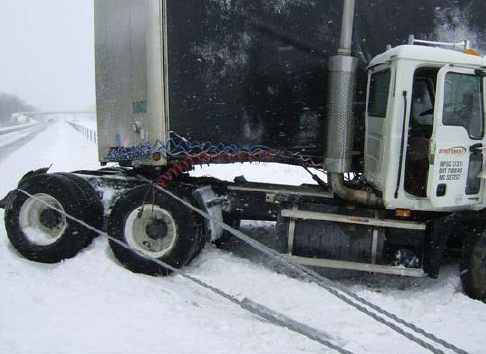
Cable barriers are now fairly commonplace along divided highways in Texas.
Other sites of interest
 |
Avenue Consultants - All About: Cable Barriers https://youtu.be/WP4pL_K3gwc |